
NEWS CENTER
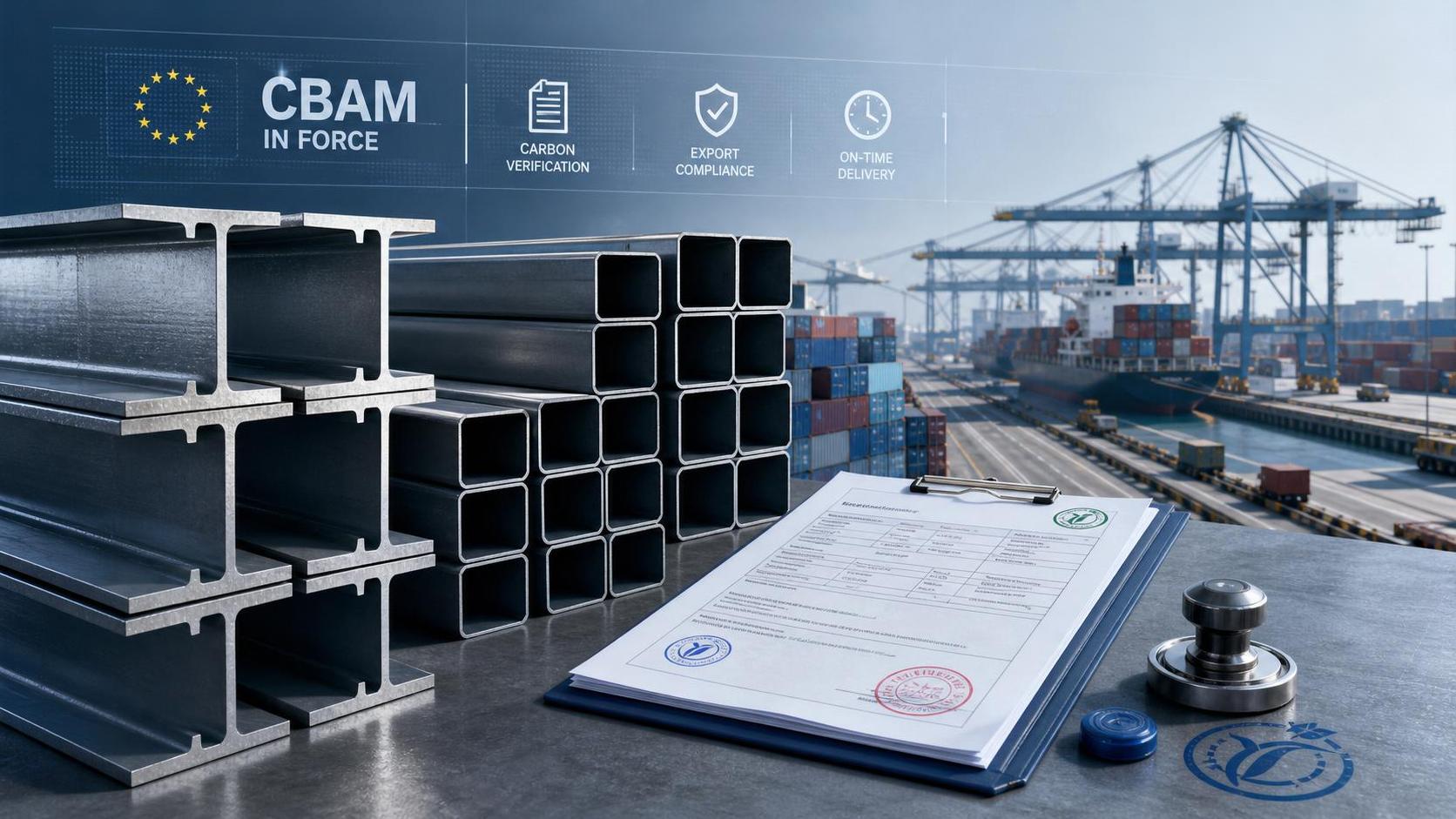
On July 1, 2026, the EU’s Carbon Border Adjustment Mechanism (CBAM) moved into its formal charging stage for steel and related profile products, creating an immediate compliance requirement for Chinese exporters shipping structural sections such as hot-rolled H-beams and cold-formed rectangular tubes into the EU market. At import declaration, these shipments must now be accompanied by embedded carbon emissions data verified by a recognized third party. For exporters, importers, customs-facing teams, and supply chain operators, this matters because non-compliance can lead to clearance delays or refusal of entry, with direct implications for Q3 delivery schedules.
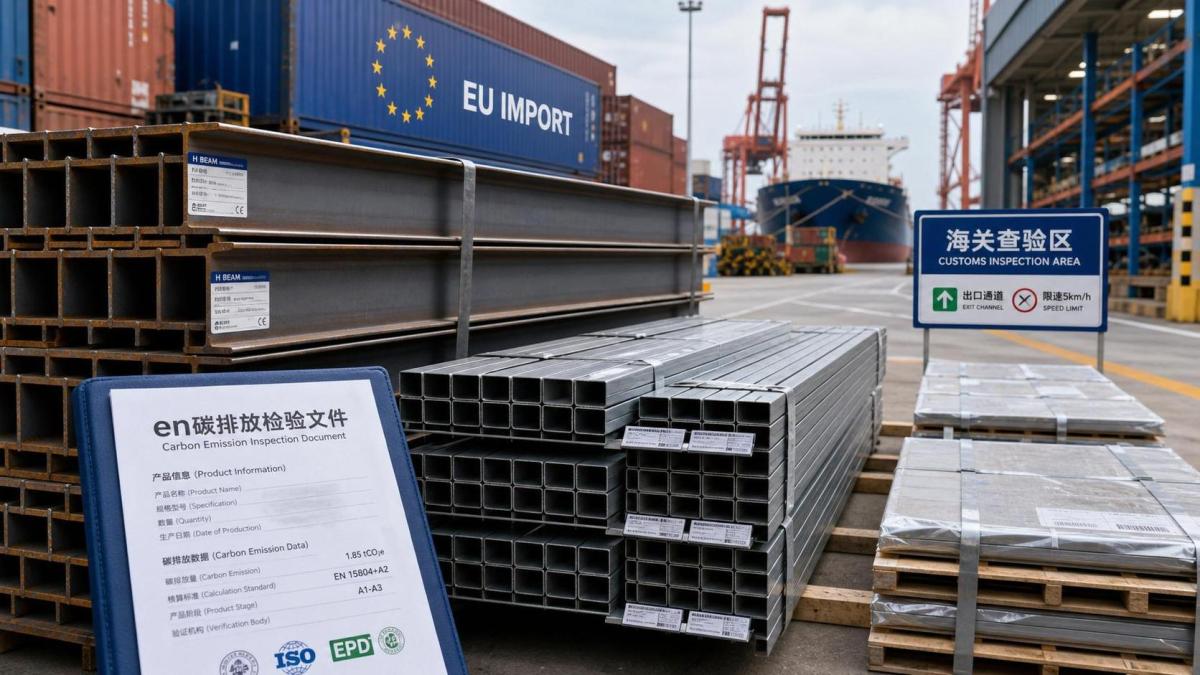
What Has Officially Taken Effect on July 1
According to the information provided, from July 1, 2026, the EU CBAM formally began its charging phase for steel and profile products. Structural steel exports to the EU, including products such as hot-rolled H-beams and cold-formed rectangular tubes, are required to submit embedded carbon emissions data at the time of import declaration.
The same information states that the emissions data must be verified by a recognized third party. If the required data is not submitted in a compliant manner, the result may be customs clearance delays or rejection of the shipment. The immediate business impact identified in the source material is potential disruption to Q3 order delivery.
Where the Pressure Will Be Felt First
Export transactions now depend on document readiness
From an industry perspective, direct trading companies exporting steel profiles to the EU are likely to feel the impact first because the requirement is tied to import declaration. The main pressure point is no longer only shipment scheduling or commercial terms, but whether compliant carbon documentation is available in time for customs processing. What deserves closer attention is the risk that a documentation gap could turn into a delivery risk.
Manufacturers may face tighter coordination with downstream export teams
Analysis shows that processing and manufacturing companies producing structural profiles for EU-bound orders may also be affected because the required embedded carbon data must ultimately correspond to the exported product. The operational impact is likely to appear in internal data preparation, third-party verification coordination, and handover of supporting documents to exporters or import-side partners.
Logistics and customs service providers may see a higher execution burden
Observably, supply chain service providers involved in customs filing, shipment release, and delivery coordination may need to manage a more documentation-sensitive process. Their exposure is practical rather than policy-driven: if carbon emissions data is missing, incomplete, or not aligned with filing timing, cargo movement and handover schedules may be affected.
EU buyers and project-side purchasers may focus more on delivery certainty
For buyers, distributors, and project procurement teams relying on imported steel sections, the issue is likely to center on fulfillment reliability. The reported risk of delayed clearance or refusal means that procurement plans tied to Q3 arrivals may need closer communication with suppliers on document status, not only on price and production progress.
What Companies Should Watch in Actual Operations
Whether target product categories are already within active filing workflows
What deserves closer attention is whether EU-bound shipments of hot-rolled H-beams, cold-formed rectangular tubes, and similar structural profiles are already being handled under a process that includes carbon data submission at declaration. The difference between knowing the rule and embedding it into shipment execution is likely to be material.
Whether third-party verification can match delivery timing
Analysis shows that the practical issue is not only the existence of emissions data, but whether it has been verified by a recognized third party before the import filing point. Companies involved in Q3 deliveries may need to pay close attention to the sequence between document preparation, verification completion, shipment dispatch, and customs declaration.
Whether commercial communication reflects compliance risk clearly
For exporters and account teams, a current priority is likely to be customer communication. Where delivery commitments depend on compliant carbon documentation, it becomes important to align expectations with EU buyers, import agents, and logistics partners. This is especially relevant where a shipment is commercially ready but may still face border-side disruption if documentation is incomplete.
Whether contingency planning covers rejection as well as delay
The source information specifically mentions both customs delays and refusal of entry. From an operational standpoint, companies may need to distinguish between a manageable timing issue and a more serious non-acceptance scenario. That distinction matters for order planning, handover timing, and escalation procedures across export, logistics, and customer-facing teams.
Why This Looks Bigger Than a One-Off Filing Issue
Observably, this development is not just a short-term administrative adjustment. The immediate fact is the start of formal charging and mandatory submission of verified embedded carbon data for relevant steel products entering the EU. Analysis shows that the broader signal lies in how carbon-related compliance is moving into the core transaction process for cross-border steel trade, particularly at the point of import declaration.
It is more appropriate to understand this as both an immediate operational change and a longer-term trade compliance signal. The immediate change is clear because shipments can be delayed or rejected. The longer-term signal still requires continued observation, especially around how consistently the requirement is enforced in live trade flows and how companies adapt their document, verification, and customer coordination processes.
How the Industry May Need to Read This Moment
At this stage, the most grounded interpretation is that the policy has already moved beyond a watchlist item for exporters of structural steel products into the EU. The confirmed consequence is practical: compliant, third-party-verified embedded carbon data is now tied to customs treatment, and Q3 deliveries may be affected if this requirement is not met. From an industry perspective, this should be read neither as a passing headline nor as a basis for exaggerated conclusions, but as a concrete compliance threshold with direct execution implications.
Basis of This Article and What Still Needs Verification
This article is based on the user-provided news title, event date, and event summary. The confirmed inputs used here are the July 1, 2026 effective date, the start of the formal charging phase of EU CBAM for steel and profile products, the requirement for recognized third-party-verified embedded carbon emissions data for relevant exports, and the stated risk of customs delay or refusal affecting Q3 deliveries.
For this type of industry development, source types typically worth checking include official announcements, company notices, industry association updates, authoritative media coverage, and standard-setting or regulatory documents. A specific official source link was not provided in the input, so further verification remains necessary. Follow-up attention should remain on any official wording updates, implementation details affecting product scope or declaration practice, and any changes that alter how the requirement is handled in actual shipment execution.

Fill in the information
NOW.
Our staff will contact you as soon as possible