
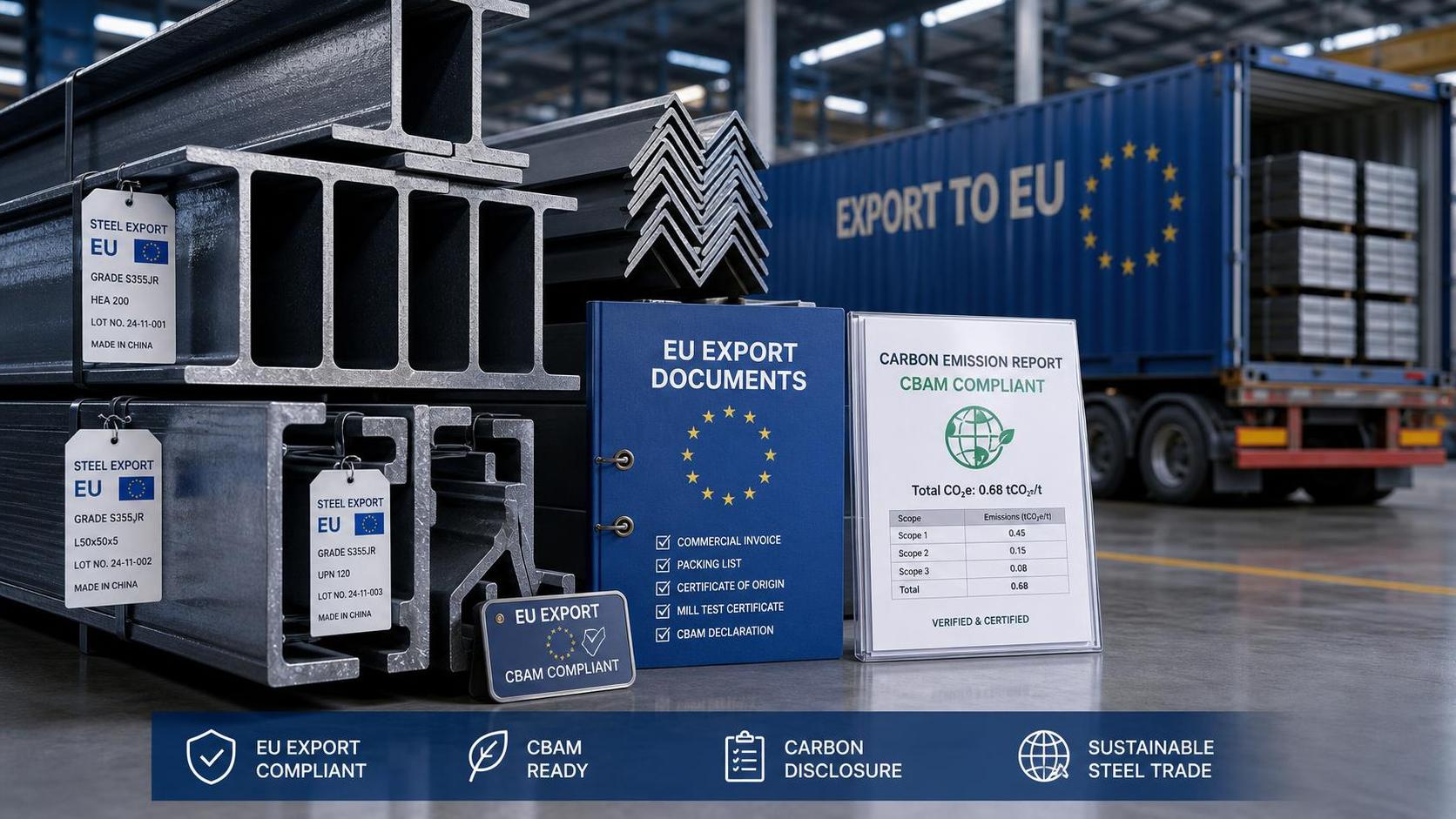
On July 21, 2026, the European Commission put into effect the third-phase transition rules for CBAM covering steel products, bringing a clearer compliance timetable for profile exports such as hot-rolled sections, H-beams, and angle steel shipped to the EU. For exporters, importers, and supply chain teams handling these products, the development matters because quarterly reporting of embedded carbon emissions will begin in October 2026 and third-party verification will be required, turning carbon data readiness into a practical trade and documentation issue rather than a background policy topic.
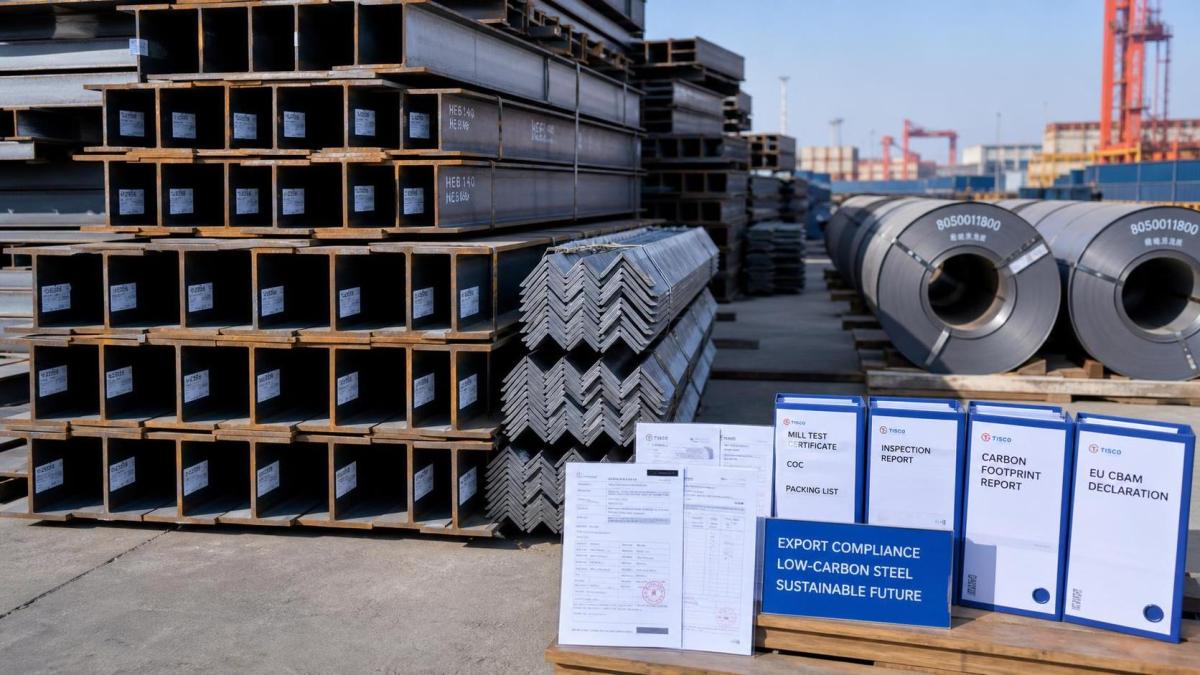
What the new transition step formally requires
The confirmed change is that the European Commission formally implemented the third-stage transition detailed rules for CBAM steel products on July 21, 2026. Under the information provided, hot-rolled profiles, H-beams, angle steel, and related profile products exported to the EU must, from October 2026, submit quarterly declarations of embedded carbon emissions and accept third-party verification. The rule change directly affects the compliance preparation cycle and documentation cost of Chinese steel exporters, while importers are required to work with suppliers to align MRV systems for monitoring, reporting, and verification.
Where the pressure shifts across the transaction chain
Export execution is moving closer to data-based compliance
From an industry perspective, exporters of covered steel profiles are likely to feel the impact first because the reporting obligation is tied to actual shipment flows and product-level documentation. The main pressure point is no longer only commercial paperwork for export sales, but also whether embedded carbon information can be prepared on time, in the required reporting rhythm, and in a form that can support third-party review. What deserves closer attention is the growing link between shipment scheduling, document readiness, and carbon data credibility.
Import-side coordination becomes part of procurement control
Importers dealing with these steel products are also exposed because the supplied information makes clear that MRV alignment with upstream suppliers is required. In practical terms, this can affect supplier coordination, purchase confirmation, and document collection before or alongside delivery arrangements. The immediate concern is not only whether material can be sourced, but whether the supplier can support the reporting and verification workflow expected under the transition rules.
Verification and documentation functions gain a larger role
Observably, the requirement for third-party verification means compliance is likely to extend beyond commercial and logistics teams. Businesses involved in documentation management, reporting preparation, and supporting verification workflows may face additional work around emissions records, supporting files, and consistency checks between trade documents and MRV-related materials. The impact is especially relevant where delivery timing depends on complete and reviewable submission sets.
What companies should watch before October reporting begins
Check whether covered profile products are already within the reporting workflow
Analysis shows that one immediate task for affected companies is to confirm whether their exported profile categories fall within the products referenced in the provided information, including hot-rolled sections, H-beams, and angle steel. This is less about broad policy interpretation and more about making sure internal product mapping, export documentation, and reporting responsibilities are not left to the last stage before shipment or filing deadlines.
Prepare MRV handoffs between suppliers and buyers
What deserves closer attention is the handoff of emissions-related information between suppliers and import-side counterparties. Because the provided facts point to required MRV alignment, companies should focus on how monitoring, reporting, and verification information will move across the transaction chain, who owns each step, and whether supporting records can be produced in a consistent form when needed. The input does not provide detailed execution procedures, so this should be treated as a compliance preparation area rather than an already settled operating model.
Reassess documentation timing and cost exposure
Analysis shows that the rule change may affect compliance lead times and document-related costs for exporters. Businesses should therefore pay attention to whether existing quotation, contracting, and delivery arrangements leave enough time for quarterly emissions declarations and third-party verification support. It is more appropriate to understand this as a practical adjustment in export administration and compliance sequencing, not yet as a confirmed end-state for all transaction practices.
Track how counterparties reflect the rule in commercial requirements
Observably, buyers, importers, and supply chain partners may begin reflecting the new requirement in document requests, supplier qualification checks, or delivery preconditions. Since the provided information does not include formal downstream contract language or tender wording, companies should monitor these changes closely rather than assume a single market practice has already formed.
Why this looks like an execution signal, not only a policy reminder
Analysis shows that this development is better understood as a concrete execution signal within the CBAM transition process for steel profiles. The rule change now links a defined implementation date, a reporting start point in October 2026, and a verification requirement. That combination matters because it narrows the space for treating carbon reporting as a future issue. At the same time, it remains necessary to observe how reporting expectations, verification practice, and transaction-level document standards are applied in actual trade flows, since the input does not provide further operational detail.
How to read the change at this stage
At this stage, the most balanced reading is that the July 21 measure represents a landed compliance development for covered steel profile exports to the EU, with direct implications for reporting preparation, document management, and supplier-importer coordination. It should not be overstated as a fully settled market outcome, but it is already more than a general policy headline. For affected businesses, the immediate significance lies in earlier preparation for carbon data submission and verification-linked trade administration.
Basis of this article and points that still need checking
This article is generated from the user-provided news title, event date, and event summary. For events of this type, commonly relevant source categories may include official notices, releases from regulatory authorities, customs or trade-administration information, industry association updates, standard-setting documents, and reporting by authoritative media. A specific official source link was not provided in the input, so the underlying wording and later implementing details still need ongoing verification. Further observation should focus on subsequent policy detail, verification practice, changes in tender or procurement documents, market feedback, and how companies actually implement MRV coordination in operations.

Fill in the information
NOW.
Our staff will contact you as soon as possible