
NEWS CENTER

On June 27, 2026, the U.S. Department of Commerce announced the start of the fifth annual administrative review of the antidumping duty order on welded carbon steel pipe from China under HS 7306.30. For exporters, importers, buyers, and customs-facing supply chain operators, this is not just a procedural update: the review period covers shipments made from April 1, 2025 to March 31, 2026, and its outcome is set to affect cash deposit rates, final duty exposure, and clearance costs for U.S.-bound shipments from Q3 2026 onward. Because this product is commonly used in construction supports, agricultural greenhouse structures, and industrial conveying systems, the development deserves close attention across pricing, contracting, and delivery planning.
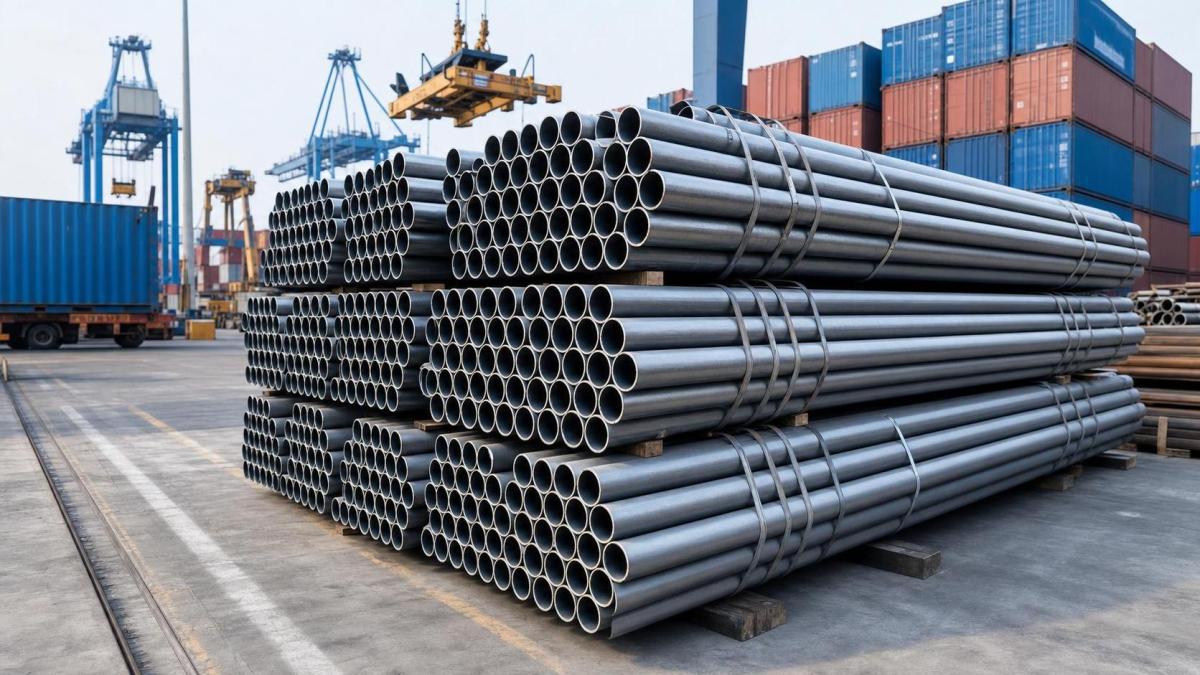
What the June 27 Notice Confirms
The confirmed facts are limited but commercially meaningful. The U.S. Department of Commerce issued a notice on June 27, 2026 formally initiating the fifth annual administrative review of the antidumping duty order covering welded carbon steel pipe from China. The goods involved are identified under HS 7306.30. The review covers exports made during the period from April 1, 2025 through March 31, 2026. According to the event summary provided, the review result will directly affect cash deposit rates for shipments to the United States beginning in Q3 2026, as well as final duty rates and importer customs clearance costs. The product category is described as a high-frequency export item used widely in construction supports, agricultural greenhouse applications, and industrial conveying systems.
Where the Pressure Will Likely Appear First
Export quotations and contract discussions
From an industry perspective, exporters and trading companies are likely to feel the first impact in quotation work. If future U.S.-bound shipments may face adjusted deposit rates or different final duty exposure, the margin assumptions behind second-half 2026 offers become less stable. What deserves closer attention is whether existing quotation validity, duty-sharing language, and price adjustment mechanisms are strong enough to absorb review-related uncertainty without creating disputes at shipment stage.
Importer clearance and landed-cost control
For importers and customs-facing logistics participants, the issue is tied directly to clearance cost management. Analysis shows that when an administrative review can affect both deposit rates and final duty outcomes, the operational burden does not stop at product purchase; it extends to landed-cost estimation, customs budgeting, and post-entry cost planning. Companies involved in U.S. clearance should therefore monitor how this review changes the cost assumptions used in purchase orders, customs declarations, and delivery commitments.
Project buyers in downstream applications
Buyers using welded carbon steel pipe in construction supports, greenhouse systems, or industrial conveying projects may not be parties to the trade review, but they can still face indirect effects. Observably, their exposure is most likely to appear in procurement timing, supplier price revisions, and delivery scheduling. Where projects depend on regular replenishment of this product category, procurement teams should pay attention to whether suppliers begin revising lead-time commitments or adding trade-risk language to sales documents.
Supply chain service providers and document handling
Supply chain service providers, including parties involved in shipment coordination and customs document preparation, may also need closer alignment with customers. It is more appropriate to understand this as a documentation and execution signal rather than a confirmed operational disruption. Still, businesses handling export and import files should watch for higher sensitivity around product classification, shipment period identification, commercial paperwork consistency, and any supporting records linked to U.S.-bound entries covered by the relevant period.
Practical Points Companies Should Watch Now
Review which shipments fall into the covered period
Analysis shows that one immediate task is to separate shipments covered by April 1, 2025 to March 31, 2026 from later business. This matters because the review is tied to a defined export period, while its downstream cost effects are expected to appear in Q3 2026 onward. Internal teams should make sure shipment records, contract files, and customs-related documents are organized around that timeline.
Recheck pricing clauses and duty assumptions
Companies quoting or sourcing for the U.S. market should revisit how they handle antidumping-related cost assumptions in offers and contracts. The current information does not provide a final outcome, so businesses should not treat any new rate as settled. What deserves closer attention is whether current contracts clearly define responsibility for duty-related cost changes, customs expense movements, and any gap between initial deposit treatment and final assessed exposure.
Keep compliance files ready for cross-functional use
For exporters, importers, and service providers, documentation should not be viewed only as a customs task. Observably, product description consistency, HS-based file management, technical paperwork, and shipment records may all become more important when trade measures affect both pricing and clearance. Even without additional execution details in the input, companies have reason to keep commercial and technical records aligned across sales, logistics, and compliance teams.
Track later official wording and market execution
The event summary confirms the launch of the review, but it does not provide subsequent implementing details. For that reason, companies should treat this as an active rule-development point rather than a completed result. Teams with U.S.-bound business should follow later official wording, customer responses, and any changes in procurement documents or delivery terms that reflect a revised duty-risk view.
Why This Looks More Like an Execution Signal Than a Final Outcome
Observably, this development is best read as a live trade-compliance signal rather than a closed policy event. The confirmed change is the initiation of the review itself, and that matters because it brings future pricing, cash deposit treatment, and customs cost expectations into near-term business decisions. At the same time, the input does not provide a final ruling, revised rates, or detailed implementation language. It is therefore more appropriate to understand this as a rule process that has moved into a stage with direct commercial relevance, but whose practical effect still requires continued observation.
How the Market Is Likely to Read the Development
From an industry perspective, the significance of this notice lies less in headline value and more in execution timing. It connects a defined historical shipment period with possible cost consequences for U.S.-bound trade from the second half of 2026. That makes it relevant to exporters setting new offers, importers managing landed cost, and buyers trying to avoid procurement disruption in pipe-dependent applications. A rational reading is that the industry should not assume immediate operational change across all transactions, but it also should not treat the review as a remote procedural matter.
Basis of This Article and What Still Needs Verification
This article is based on the user-provided news title, event date, and event summary. For events of this kind, market participants would normally also look to source types such as official notices, releases from regulatory authorities, customs or trade-administration information, industry association updates, standards-related documents, and reporting by authoritative trade media. No specific official source link was provided in the input, so the exact official publication path still needs to be verified on an ongoing basis. Analysis also suggests continued monitoring of later rule details, implementation language, procurement document changes, market feedback, and how affected companies adjust execution in practice.

Fill in the information
NOW.
Our staff will contact you as soon as possible