
NEWS CENTER

On August 5, 2026, the U.S. Department of Commerce opened a five-year Sunset Review of the antidumping duty order on hot-rolled sections from China exported to the U.S. under HS 7216.99, while also initiating a CVD Changed Circumstances Review. For distributors, importers, and downstream steel structure manufacturers in the U.S. market, this matters because it introduces a live compliance and pricing issue for the second half of 2026: the scope of coverage and the applicable duty level may be revised by the end of the third quarter, affecting cost calculations, customs preparation, and order quotations already in motion.
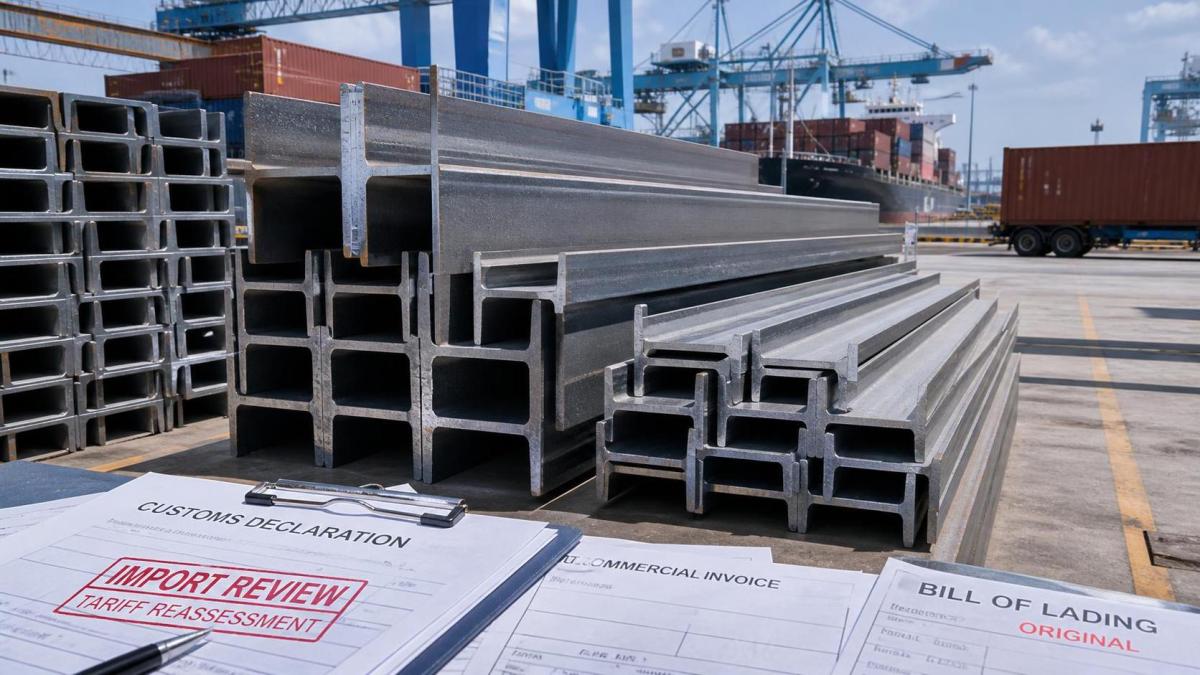
What Has Officially Been Put Under Review
The confirmed facts are limited but commercially significant. The action was announced on August 5, 2026 by the U.S. Department of Commerce. It concerns hot-rolled sections from China shipped to the United States under HS 7216.99. The agency has initiated two review tracks at the same time: a five-year Sunset Review of the existing antidumping duty order and a Changed Circumstances Review related to CVD. According to the provided event summary, the review will assess whether the current duty level remains necessary, and the scope of products covered as well as the duty rate may be updated near the end of the third quarter of 2026.
Where the Pressure Will Show Up First in the Supply Chain
Import-side cost planning becomes less stable
From an industry perspective, U.S.-side importers and distributors are among the most directly exposed parties because their landed-cost models depend on duty treatment and product scope. If either the rate level or the coverage boundary is adjusted, the immediate effect is likely to appear in quotation validity, customs-entry preparation, and margin planning for orders scheduled for the second half of 2026. What deserves closer attention is whether existing purchase assumptions still match the product classification and duty treatment that customs teams are preparing against.
Downstream fabricators may need to revisit order pricing
For downstream steel structure manufacturers, the issue is not only the headline tariff question but also the timing of project pricing. Analysis shows that when a review is active and a possible adjustment window is already signaled, bid teams and procurement teams may need to check whether contract pricing, pass-through clauses, or delivery schedules remain workable if duty exposure changes before shipment or clearance. This is especially relevant where imported hot-rolled sections feed into priced but not yet fully executed orders.
Trade and supply-chain service providers face a documentation burden
Customs brokers, compliance support teams, and other supply-chain service participants may also be affected because review-driven changes can shift the emphasis toward classification accuracy, supporting trade documentation, and product-scope verification. Observably, even before any final adjustment is known, documentation discipline becomes more important where a product category is under active review and where customs preparation for later 2026 shipments is already underway.
Practical Issues Companies Should Track Now
Watch for changes in scope language and rate treatment
Analysis shows that the most immediate practical task is not to assume a final outcome too early, but to monitor whether later official wording changes how the covered products are defined and how the applicable duty treatment is described. Businesses tied to HS 7216.99 shipments should pay attention to whether internal product mapping, customs declarations, and sales documentation remain aligned with the reviewed scope.
Recheck customs and trade files tied to pending shipments
Where orders are already booked or planned for late Q3 and the second half of 2026, companies should review the readiness of customs-facing documents and internal trade files. It is more appropriate to understand this as a preparation issue at this stage: if rate levels or scope boundaries are revised, the ability to respond quickly may depend on how complete product descriptions, transaction records, and supporting documentation already are.
Revisit pricing assumptions in contracts and quotations
For distributors, importers, and downstream buyers, the review creates a need to test pricing assumptions rather than treat current duty treatment as static. Analysis shows that quotation windows, procurement approvals, and customer commitments may need closer coordination if duty-related costs are part of margin-sensitive transactions scheduled around a possible late-Q3 adjustment point.
Check delivery timing against compliance readiness
What deserves closer attention is the interaction between shipment timing and compliance preparation. Even without a confirmed final outcome yet, firms may need to examine whether deliveries planned for the second half of 2026 rely on assumptions that could become outdated if the review results alter scope coverage or the duty rate before customs clearance.
Why This Looks More Like an Execution Signal Than a Final Rule
Observably, this development should not yet be read as a completed rule change with a settled commercial outcome. It is better understood as an execution-stage signal that puts affected market participants on notice that tariff treatment and product coverage are under active review. From an industry perspective, the practical importance lies in the timing: the review process is already live, and the possibility of a Q3 2026 adjustment means businesses cannot wait for final certainty before checking pricing logic, customs files, and procurement assumptions. At the same time, the final commercial effect still depends on subsequent official expression and implementation details that were not included in the provided information.
How the Market Should Read This Development
In practical terms, this event is most appropriately understood as a rule-related development with immediate operational relevance but without a confirmed final result yet. The key significance is that trade compliance, purchasing, and delivery planning for the affected product category may need to be reassessed now, especially for transactions tied to late-2026 execution. A measured reading is more suitable than a definitive one: the review has begun, the adjustment window has been signaled, and the market impact will depend on how the later scope and rate decisions are ultimately expressed and applied.
Basis of This Article and What Still Needs Verification
This article is based on the user-provided news title, event date, and event summary. For developments of this type, relevant source categories commonly include official announcements, releases by regulatory authorities, customs or trade administration notices, industry association updates, standard-setting documents, and reporting by established media covering trade and industrial regulation. No specific official source link was provided in the input, so the official text and any later implementing language still need to be verified on an ongoing basis. What still requires close observation includes later policy wording, enforcement interpretation, customs and compliance treatment, changes in bid or procurement documents, market feedback, and how affected companies execute against the review timeline.

Fill in the information
NOW.
Our staff will contact you as soon as possible