
NEWS CENTER
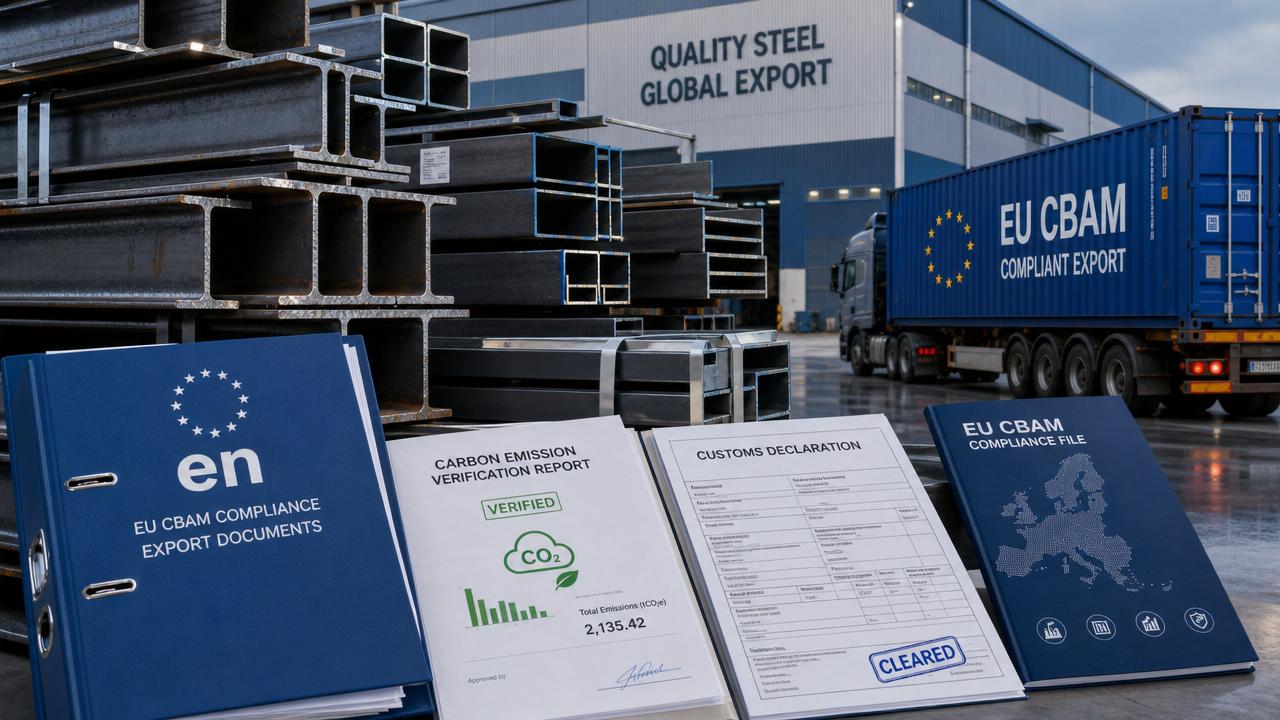
On June 10, 2026, a new compliance requirement took effect for certain steel exports from China to the EU: the EU Carbon Border Adjustment Mechanism (CBAM) now covers hot-rolled H-beams, welded H-beams, and some structural alloy steel sections within its transitional reporting scope. For exporters, this is not only a reporting update but also a change that can affect customs timing, documentation flow, and delivery coordination, especially where quarterly carbon emissions intensity data and linked third-party verification reports are now part of the export process.
What Has Entered the Reporting Scope
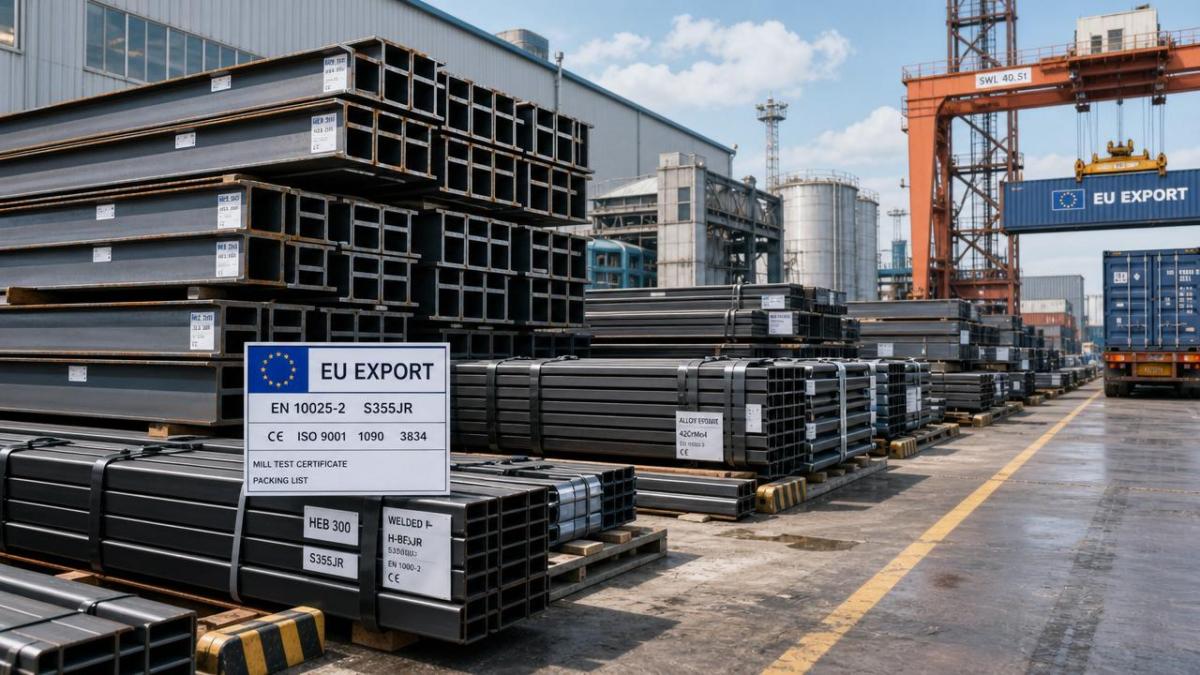
According to the information provided, from June 10, 2026, the EU CBAM formally expanded its transitional reporting scope to include hot-rolled H-beams, welded H-beams, and certain structural alloy steel sections.
Exporters are required to submit quarterly data on carbon emissions intensity from the production process through the CBAM portal. The submission must also be linked to certification reports issued by Chinese third-party verification institutions.
The information provided also indicates that this change directly affects export procedures and timing for steel sections shipped to Europe. If reporting is not completed in compliance with the requirement, customs clearance may be delayed or additional guarantee requirements may arise.
Where the Immediate Pressure May Appear
Export execution is likely to become more document-driven
From an industry perspective, direct trading companies are the first group likely to feel the impact because the new requirement sits at the point where shipment execution and compliance documentation meet. The practical pressure is likely to appear in filing schedules, document completeness, and coordination between shipment timing and quarterly CBAM reporting.
Manufacturers may face tighter data preparation demands
Processing and manufacturing companies involved in the covered steel sections may also be affected because the reporting requirement is tied to production-process carbon emissions intensity. Analysis shows that the operational focus is not only on producing the goods, but also on whether emissions-related production data can be organized in a form that supports exporter submissions and linked verification reports.
Supply chain service providers may need closer timing control
Logistics, customs, and other supply chain service providers may be indirectly affected as the rule can influence export timing and customs handling. What deserves closer attention is the risk that a documentation gap may turn into a shipment delay, which makes communication between exporters, manufacturers, and service providers more time-sensitive than before.
EU-facing buyers may pay closer attention to compliance readiness
Buyers and downstream counterparties in the EU market may also adjust their expectations around delivery preparation and document matching. Observably, the issue is no longer limited to product specifications and shipment dates; compliance readiness may become part of transaction communication for covered steel sections.
What Companies Should Watch Now
Confirm whether products fall within the covered categories
A practical first step is to review whether current EU-bound exports involve hot-rolled H-beams, welded H-beams, or the structural alloy steel sections mentioned in the provided information. This matters because the rule change is product-specific rather than a general statement about all steel exports.
Check the readiness of emissions data and verification files
Companies should pay close attention to whether quarterly production-process carbon emissions intensity data can be prepared in time and whether the required third-party verification reports can be properly linked in the CBAM portal. The key issue here is not broad sustainability positioning, but whether the required compliance materials are complete and usable in actual export workflows.
Reassess delivery schedules and customs coordination
Because non-compliant reporting may lead to customs delays or additional guarantee requirements, exporters and supply chain teams should closely review lead times, customs preparation, and internal handoff points. Analysis shows that the main business risk in the near term may come from timing friction rather than from the announcement alone.
Keep watching for further official clarification
The provided information confirms the scope expansion and reporting requirement, but companies should continue to monitor how official wording, filing practices, and implementation details evolve in practice. It is important to distinguish between the policy signal itself and the operational details that shape day-to-day compliance.
How This Development Is Best Understood
Analysis shows that this development should be read as more than a one-off customs formality. It signals that carbon-related reporting requirements are moving deeper into the actual execution of steel section exports to the EU, with document management and production data becoming more directly connected to shipment flow.
At the same time, it is more appropriate to understand this as an implementation-stage industry signal rather than a fully settled end state. The confirmed facts establish the new reporting obligation and the immediate compliance consequences, but the full business impact will still depend on how companies, verifiers, and cross-border execution teams adapt in practice.
Why the Market Will Keep Following It
For the industry, the significance of this update lies in the fact that product coverage, carbon data submission, third-party verification, and customs timing are now more closely linked in certain steel export transactions. That makes this a concrete operational change, not just a policy headline.
At this stage, the most balanced reading is that the rule creates an immediate compliance requirement for affected exporters while also serving as a longer-term signal that carbon disclosure is becoming more embedded in trade execution. The extent of broader downstream impact still needs continued observation.
Basis of This Article and What Still Needs Verification
This article is based on the user-provided news title, event date, and event summary related to the June 10, 2026 expansion of EU CBAM transitional reporting to certain steel sections exported from China.
For this type of industry update, source categories typically relevant for ongoing verification may include official announcements, company disclosures, industry association information, authoritative media reporting, and standard-setting or compliance-related documents. A specific official source link was not provided in the input, so further verification remains necessary.
Areas that still deserve continued attention include whether there are additional official clarifications on implementation wording, how reporting practice is carried out through the CBAM portal, and whether compliance execution creates further operational adjustments in export timing and documentation.

Fill in the information
NOW.
Our staff will contact you as soon as possible