
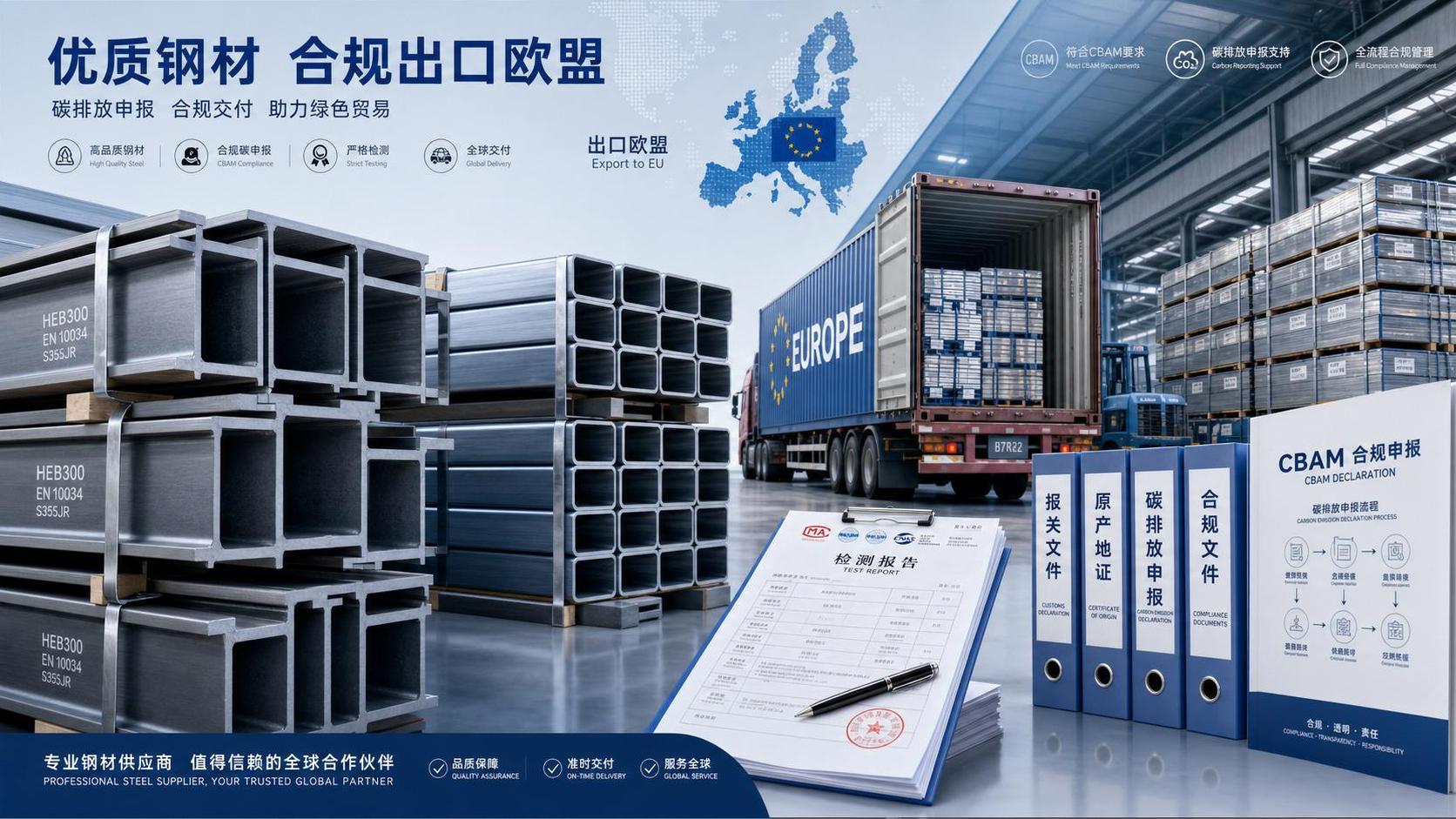
On October 1, 2026, a new compliance requirement begins to affect Chinese steel exporters shipping structural sections to the EU. Following the European Commission's publication of the transitional implementation guidance for CBAM steel products on June 28, 2026, exporters of products such as hot-rolled H-beams and cold-formed rectangular tubes must submit certified embedded carbon emissions data in tCO2e per ton, together with indirect electricity emissions data, through the EU CBAM portal. For companies involved in export sales, documentation, customs clearance, delivery scheduling, and buyer coordination, this is worth close attention because non-compliant filing now carries a direct risk of clearance delays or return of goods.
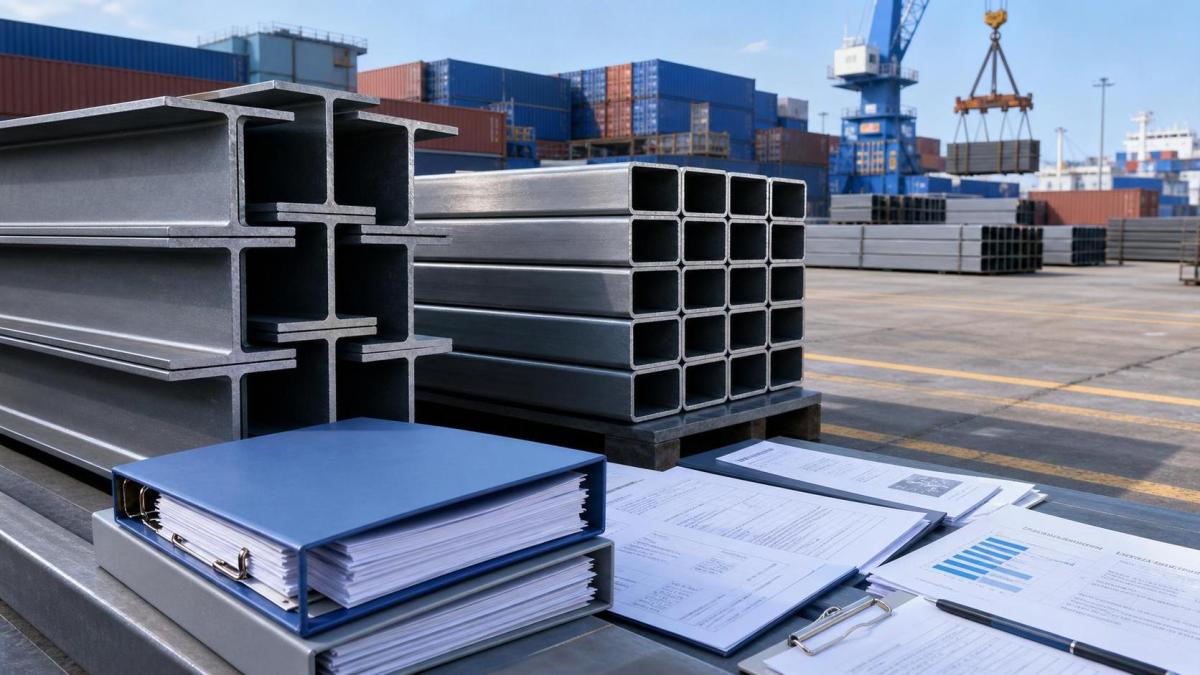
What the new filing requirement confirms
The confirmed change is that, from October 1, 2026, exporters of structural steel products covered in the guidance for shipments to the EU are required to report certified embedded carbon emissions data and indirect electricity emissions data through the EU CBAM portal.
The event is tied to the European Commission's release on June 28, 2026 of the CBAM transitional implementation guidance for steel products. The summary provided identifies hot-rolled H-beams and cold-formed rectangular tubes among the products affected.
The requirement applies to all Chinese steel export enterprises. The information provided also states that failure to complete compliant reporting may lead to customs clearance delays or the risk of returned shipments.
Where the pressure is likely to appear first
Export transaction and customs handling
From an industry perspective, the most immediate impact is on exporters handling shipments to the EU. The reason is straightforward: the reporting obligation is linked to actual export movement, and the stated compliance risk is tied to clearance and delivery outcomes. In practical terms, these companies need to pay closer attention to whether emissions data submission, certification status, and export documentation are aligned before shipment.
Manufacturing and data preparation at plant level
Observably, manufacturers of affected steel sections may face pressure in the preparation of product-level emissions information. Because the rule refers specifically to certified embedded carbon emissions and indirect electricity emissions data, the operational impact is not limited to sales teams. Production sites, internal compliance staff, and document preparation functions may all need to coordinate more closely on the underlying data used for export declarations.
Buyers, distributors, and delivery coordination
Companies on the purchasing and distribution side may also be affected through delivery timing and supplier qualification review. Analysis shows that if reporting is incomplete or not accepted in time, downstream buyers and channel partners could face uncertainty in shipment schedules. What deserves closer attention is whether procurement teams begin to treat carbon data readiness as part of routine supplier review for EU-bound structural steel orders.
Certification and testing-related service support
The requirement for certified emissions data suggests a more visible role for service providers involved in compliance support, verification workflows, and technical documentation. This should be understood as a practical workflow effect rather than a confirmed market outcome: where exporters need certified reporting inputs, outside support functions may become more involved in document preparation and review.
What companies should monitor now
Check whether product scope and filing responsibility are clearly mapped
Analysis shows that companies exporting hot-rolled H-beams, cold-formed rectangular tubes, and similar structural sections should first confirm which shipments fall within the filing requirement described in the guidance. A basic but important task is to map products, export destinations, and filing responsibilities inside the company so that reporting does not remain disconnected from shipping execution.
Review readiness of emissions records and supporting documents
What deserves closer attention is the practical availability of certified embedded carbon emissions data and indirect electricity emissions data for each relevant export flow. If the internal document chain is incomplete, the problem may appear late, at the point of customs handling or buyer submission checks. For that reason, exporters should watch the consistency of technical records, compliance files, and shipment documentation used in EU-bound orders.
Track how counterparties reflect the rule in trade documents
Observably, the next area to monitor is how the requirement appears in contracts, order documents, product specifications, or delivery conditions. The provided information does not set out those details, so it would be premature to treat any one format as settled practice. Even so, companies should closely follow whether buyers and intermediaries begin to request more explicit carbon reporting materials before shipment.
Watch for execution language and operational interpretation
The guidance confirms the filing obligation and the risk of non-compliance, but the summary provided does not include broader operational interpretation beyond that point. It is therefore more appropriate to understand the current stage as one in which companies should monitor subsequent official wording, implementation practice, and any changes in the way reporting expectations are communicated through trade and delivery procedures.
Why this looks more like an execution signal than a distant policy discussion
In editorial observation, this development is better understood as an execution-stage compliance signal rather than a general policy headline. The reason is that the information provided includes a specific effective date, a defined reporting channel, named product examples, required emissions categories, and a stated consequence for non-compliance in cross-border shipment handling.
At the same time, it should not be overstated as a fully settled end-state for every operational detail. Observably, the market still needs to watch how filing expectations are reflected in day-to-day export procedures, buyer documentation demands, and compliance review practices. That distinction matters: the rule change is real, but some aspects of implementation may still need closer observation as companies begin applying it in live transactions.
How this update is best understood for the market
On balance, this update points to a concrete tightening of reporting obligations for Chinese steel exporters shipping covered structural products to the EU. The immediate significance lies less in abstract climate policy debate and more in the fact that export compliance, shipment preparation, and delivery timing may now depend on carbon data readiness.
It is more appropriate to understand this event as a rule that has moved into practical execution, while still requiring continued observation of how compliance expectations are applied in actual trade workflows. For the industry, the key issue now is not whether the reporting requirement exists, but how consistently companies can connect emissions data, certification, and export delivery procedures under the new timeline.
Basis of this article and points requiring follow-up
This article is generated based on the user-provided news title, event date, and event summary. The confirmed factual basis used here is limited to the provided description of the European Commission's June 28, 2026 publication and the October 1, 2026 reporting requirement for affected steel exports to the EU.
For events of this kind, relevant source types typically include official announcements, releases from regulatory authorities, customs or trade administration information, industry association updates, standards-related documents, and reporting by authoritative trade media. No specific official source link was provided in the input, so the exact official link remains to be verified on an ongoing basis.
Follow-up observation is still needed on later implementation detail, certification practice, reporting interpretation, changes in tender or trade documents, industry feedback, and how exporters actually execute the requirement in shipment workflows.

Fill in the information
NOW.
Our staff will contact you as soon as possible